
Reducing The Incidence Of Child, Early, And Forced Marriage (Cefm) In The Hard-To-Reach Elgon Districts Of Bududa, Namisindwa and Manafwa: A Campaign For Change
Child, early, and forced marriage (CEFM) is a pervasive issue affecting tens of thousands of girls in the hard-to-reach districts of Bududa, Namisindwa and Manafwa where socio-economic challenges, cultural norms, and limited access to education and healthcare exacerbate the problem. To combat this, a comprehensive campaign is essential, focusing on advocacy through constructive engagement, awareness on rights, education, community engagement, and support for vulnerable populations.
Between 2008 and 2020, over 400 major landslides were reported in the Mount Elgon region, killing close to 1000 people and displacing thousands internally (Kabunga etal 2022). Women and girls are disproportionately subjected to indirect impacts that arise in the aftermaths of disasters, such as SGBV including forced early marriages. Recent data in Bududa district revealed that 318 girls were forcefully married off between 2020 and 2023 alone. Such disaster impacts are compounded by deeply ingrained gender inequalities caused by socioeconomic conditions, negative cultural/traditional norms and practices which have repeatedly put females at a disadvantage. Despite annual occurrence of disasters, district authorities have failed to prioritize efforts that address SGBV; yet women and girls lack crucial advocacy skills to claim their rights. Therefore, poorly coordinated responses to disasters in these hard-to-reach districts have worsened marginalization of women and girls. This grossly dents efforts for gender equality as enshrined in national, regional and international policies/action plans and protocols.
Objectives of the Campaign
The campaign aims to achieve the following objectives:
- Raise Awareness: Educate communities about the harmful effects of CEFM on girls' health, education, and future prospects.
- Empower Girls: Provide girls with access to education, skills training, and support networks to help them resist early marriage.
- Engage Communities: Work with local leaders, parents, and community members to shift harmful cultural norms and promote girls' rights.
- Strengthen Support Systems: Enhance access to healthcare, legal support, and protection services for girls at risk of CEFM through multi-sectoral response.

Strategies
This campaign employs the following strategies:
- Advocacy: Engage with policymakers, community leaders, and influencers to push for laws and policies that protect girls' rights and prevent CEFM.
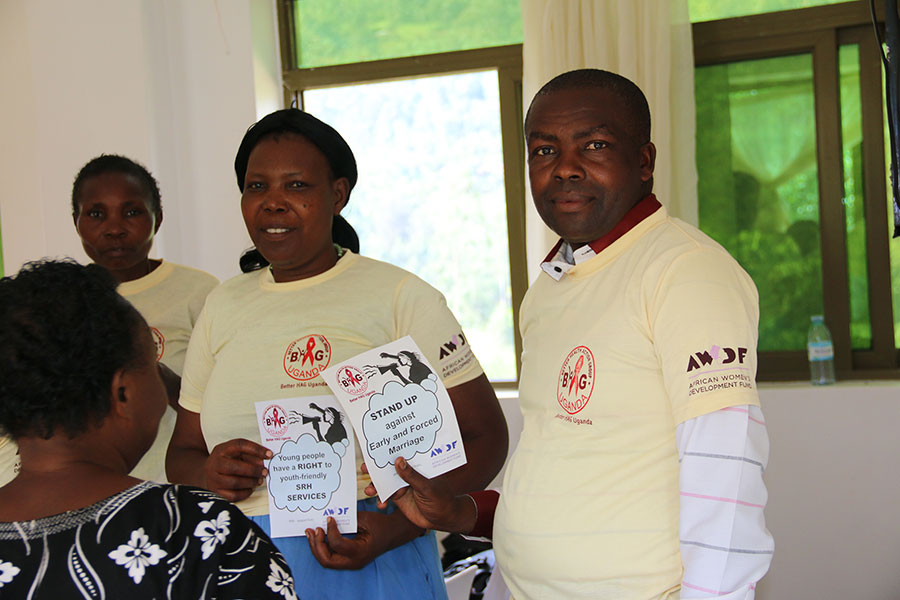
- Community Outreach: Conduct workshops, community dialogues, seminars, and door-to-door campaigns to raise awareness about the negative impacts of CEFM.
- Girls' Empowerment Programs: Work with government and private sector to harness safe spaces for girls to access education, mentorship, and skills training.
- Partnerships: Collaborate with local/grassroots organizations, governments, and international bodies, including funders like the African Women’s Development Fund (AWDF) and AmplifyChange, to amplify the campaign's reach and impact.
- Media Engagement: Utilize traditional and social media to disseminate messages, share success stories, and promote advocacy efforts.
Our Advocacy Efforts
Advocacy is crucial to ending CEFM. This campaign is:
- Pushing for effective Policy Implementation: Advocate for unconditional implementation laws and policies that establish 18 as the minimum age of marriage, without exceptions.
- Increase Funding: Encourage local governments to prioritize and allocate resources to programs and initiatives that prevent CEFM.
- Raise Awareness: Use media and community outreach to raise awareness about the issue and promote advocacy efforts.

Expected Outcomes
The campaign aims to achieve the following outcomes:
- Reduced CEFM Rates: A significant decrease in the incidence of child, early, and forced marriages in targeted districts.
- Increased Awareness: Communities are better informed about the harmful effects of CEFM and the benefits of keeping girls in school.
- Empowered Girls: Girls are equipped with the skills, knowledge, and confidence to make informed decisions about their lives.
- Strengthened Community Support: Local leaders and community members actively support efforts to end CEFM.
Implementation Plan
The campaign will be implemented in phases, including awareness-raising, girls’ empowerment, community engagement, and support systems. Partnerships with local organizations, governments, and international bodies will be crucial to the campaign’s success.
Monitoring and Evaluation
The campaign will be monitored and evaluated through indicators such as:
- Commitments to implement laws that counter CEFM discharged, disaggregated by district
- Public statements denouncing CEFM by key influencers, including cultural, traditional and other community leaders
- Number of CEFM perpetrators apprehended and subjected to the law
- Number of victims of CEFM reintegrated into school
- Number of community members reached
- Number of cases reported
- Surveys and feedback
By working together and incorporating advocacy efforts, we can create a future where every girl has the opportunity to thrive, free from the constraints of child, early, and forced marriage.